The EU Wants to Tax Large Fortunes More Heavily
The European Commission’s 2026 wealth-taxation study examines net wealth, capital gains, inheritances, gifts, and exit taxes. Here is what the policy direction could mean for internationally mobile families.
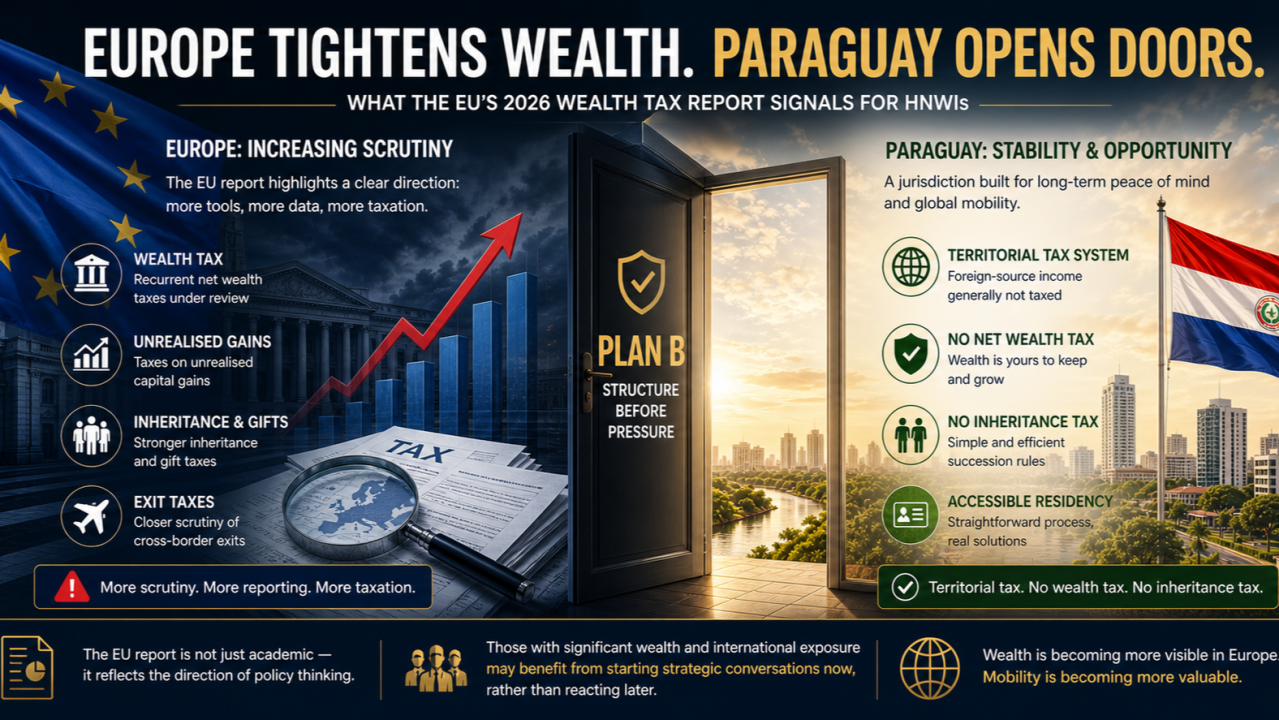
The European Commission has just released a major three-volume study in March 2026 titled “Wealth Taxation, Including Net Wealth, Capital and Exit Taxes”. The message from Brussels is clear: those with substantial wealth will be expected to contribute more. According to the report, the top 10% of the EU population now hold around 60% of total household wealth, while the top 1% continue to increase their share faster than the global average. In response to this rising wealth concentration, policymakers are focusing directly on high-net-worth assets. The study thoroughly examines five key tax instruments:
- Recurrent net wealth taxes
- Taxes on unrealised capital gains (accrual taxation)
- Taxes on realised capital gains
- Inheritance and gift taxes
- Exit taxes
The core conclusion of the report is straightforward: current wealth-related taxes are too weak, full of exemptions, loopholes, and inconsistent valuations. The goal is to make them more effective - meaning broader, harder to avoid, and more revenue-generating. Key directions highlighted in the report include:
- Broader tax bases with fewer exemptions and reliefs
- Digital asset registers and improved third-party reporting
- Stronger international cooperation and automatic exchange of information
- Specialised units focused on monitoring High Net Worth Individuals (HNWIs)
- Reinforced exit taxes to address international mobility
While the report acknowledges past failures - such as the repeal of net wealth taxes in Germany and Austria due to low revenue and high administrative burdens - it focuses on learning from those mistakes to design more robust systems.
A Strategic Perspective
In today’s environment of increasing fiscal pressure and geopolitical tensions at Europe’s borders, many HNWIs are quietly exploring long-term alternatives that offer greater stability and efficiency. Paraguay stands out as a particularly interesting option. The country operates a territorial tax system - taxing only income generated locally at competitive rates, while foreign-source income is generally not taxed. It has no net wealth tax and no inheritance or gift tax. Equally important, Paraguay is located far from the geopolitical risks affecting Europe, offering a stable and peaceful environment. The country also provides a relatively straightforward and accessible residency process, making it a practical Plan B - a welcoming jurisdiction that can open its doors when needed, while allowing residents to maintain global business activities with simplicity and predictability.